Being System Driven
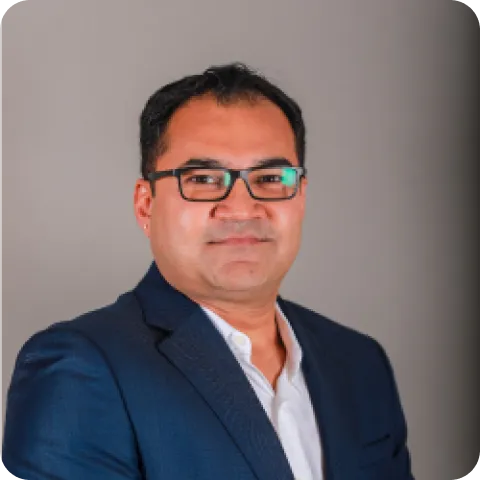
Amit Kumar, Head of Finance CoE at Avataar Ventures, on system-driven companies — automation as a continuous process, and the CFO as the CEO's eyes and ears.
Chapters
Show Notes
Amit Kumar, Head of Finance CoE at Avataar Ventures, brings a unique perspective from the vantage point of an investor, advisor, and consultant to CFOs. In this conversation we unpack how he thinks about the evolving role of CFOs, IT and automation within finance departments, the CEO-CFO relationship dynamics, working with investors, and his advice for emerging finance professionals.
Avataar is a premier growth-stage VC firm specializing in nurturing SaaS and B2B startups building in India for the globe. Amit’s Finance Centre of Excellence supports the CFOs across the portfolio.
Amit brings over two decades of experience from multinationals and startups across India and beyond — GE, Oracle, Schweppes, Bosch, and Attune Technologies (a HealthTech SaaS company backed by Avataar Ventures itself, where he was the CFO). He also founded LOGIQORE, a venture offering fractional-CFO and advisory services to early and growth-stage B2B and SaaS startups across India and the ASEAN region.
His mastery isn’t confined to one area — setting up and streamlining financial operations, managing cash flows, growth strategies with financial KPIs tailored for startups, multi-country office setup, policies and procedures, compliance, and equity / debt financing, M&A, and JV setups in India.
Takeaways
- A company should be system-driven, not people-dependent. The CFO’s job is to judge how much automation is required, where, and when.
- The modern CFO is the CEO’s eyes and ears. Not a backward-looking accountant — the role is to flag where the business might be going wrong before it does. Risk, not reporting.
- “Saying no” is easy and unproductive. The modern CFO offers a solution alongside the constraint. That’s the unlock that gets the rest of the business to bring them in earlier.
- Automation has no one-size-fits-all schedule. Bring it in as early as the complexity demands it. The trigger is loss of visibility — when the CFO can no longer give management a forward view because the systems aren’t there, it’s time.
- Sell technology by its operational benefits. Visibility, transparency, real-time decisioning, cost reduction through system-driven contract negotiation. Not “automation for its own sake.”
- The three-eyes principle. The person who does, passes, and approves a transaction must all be different. Systems make that enforceable instead of aspirational.
- Treat investors as partners, not auditors. Provide accurate, timely information AND ask them for advice — they’ve seen the patterns across their portfolio.
- Learning never stops. The day you assume you know everything is the day you stop being useful. Stay curious, stay collaborative — especially with non-finance teams who’ll come to trust you as an ally.
Notable Quotes
I firmly believe that company should not be people dependent, rather it should be system driven.
Learning never stops.
At the end of the day, you should feel satisfied that you have done something good for the company. [If] That part is there on each day you come back home, I think that's the job you should do.
If you give something free, it has no meaning for the customer because he anyways does not value the effort gone into that product. If there is a charge for it, there is a value for it.
Over the last 20 years, I think most of the companies have understood that, finance means much more than accounting actually. Accounting is only a subset of the entire thing what finance department can do. And a CFO is a guy who basically runs the show for them as far as finance and operations are concerned. So he is not a guy who has to only look at the numbers or the performance of the company after the performance has happened. He is a guy who has to also tell you that you are getting into this risk. The way the business is functioning, I think we can achieve these kinds of numbers.
CEO understands the CFO is not a finance accounting guy. He is the guy who is basically my eyes and ears and helps me to understand where am I going wrong or is there a chance for me to go wrong or where am I doing really great.
Saying no is very easy, anyone can say that. But giving a solution against that problem is what I think the modern CFO does and should do.
I do believe in the 3 eyes principle which I learnt in GE, that the person who does the transaction, passes the transaction, and approves the transaction, they all should be different. So system helps you to drive that.
Being a CFO does not mean CFOs don't have emotions. They do have as well. But the thing is they have to look at the company as a whole, not look at individuals. So when I am given a choice, I go with the concept, can I save the company? And if I can save the company by cutting down some cost for the company, honestly, I will go ahead with it.
Automation is needed honestly to me at every level. You decide what level of automation you need... don't go by the concept of what should be the framework for when to bring in automation. Should bring in automation as early as possible.
A good CFO will always take that call as to, okay, now is the time to bring in a system for this company because I am losing visibility, I'm not able to give to the management the future vision of this company because... I lack on these systems. That's where you bring in things in the company.
So I feel convincing the board or the CEO is not a challenge till the time you can show future things about it, transparencies, compliance, visibility, all these factors into it, plus savings on cost based on the data you get from the system.
Maybe it comes from an investor point of view, but yes, transparency and standardization is something every investor looks at. Transparency in the sense that provide right data at the right time and take investors as your friend. They will only help you.
Lightning Round
- Sweet or Savory
- Savory
- Books or Podcasts
- Books
- Thinker or Doer
- Thinker
- Movies or Web series
- Web series
- LinkedIn or Twitter
- None
- Scotch or Vodka
- Vodka
- Money or Happiness
- Happiness
- Introvert or Extrovert
- Introvert
- Growth or Profitability
- Profitability
- Cricket or Soccer
- Cricket
- One hidden talent
- Golfing
- Ideal place to retire
- Bali
Transcript
Cold open
Rohit Agarwal: Hi, Amit. Welcome to the show. Thanks for making the time. I’m glad to have you here.
Amit Kumar: Hi Rohit, thanks for calling me on this podcast. More than happy.
Finding finance
Rohit Agarwal: Awesome. So let’s start with a little bit of your background. Tell us Amit, how did you make your way into this amazing world of finance? And now sort of landed at this COE with our venture partners.
Read the full transcript →
Amit Kumar: Sure. Okay, to be honest to you, I was never inclined towards finance. So what happened was I did my schooling everything from Patna and Bihar. So when I completed my 10th, I was very much fascinated with computer science. And I used to really score good. Means I was like 99 out of 100, 100 out of 100. That was my score in science, computer science. So I went to my dad and told, you know, I want to do something. I built my career in. computer science. That time in 1990s, the understanding of computer science was you will just be someone who will be entering something on a desktop and that’s your life. So my father was totally against that and he said, he said, what will you do with this? Just become someone like a clerk or something. It’s better you do commerce or science. So science I was not so inclined because I never wanted to be an engineer or a doctor. So then I said, okay, commerce. So that’s the time I switched in 11th and took up commerce. So suppose that means once I took commerce, the subjects interested me for sure. And then after that, again, my career was decided by my dad. He said, why don’t you try CA? I said, okay, I’ll go for it. That time, I don’t think we were brought up with the concept that we can argue with our parents or given some logics. Whatever is decided is by them and we just follow. So I then went for my CA and luckily when I started my internship, it was super nice for me. I loved it. So it was a kind of a practical exposure to companies, how they work, finding out faults, doing that forensic accounting. So it was really, really interesting for me.
Rohit Agarwal: Very nice.
Amit Kumar: then it’s, you know, no brainer. So that’s why I entered the finance world and then I qualified as a CA. And so post becoming a CA, I became a CA in 2002. And after that, you know, before that means just clearing my exams, I got a job with H-T Media. That was my first job actually.
Rohit Agarwal: Yep.
Amit Kumar: times now it’s known as H2 media so that was my first job and honestly telling me I remember my salary exact salary I used to get nine thousand seven fifty rupees per month
Rohit Agarwal: My first one was also not that far from that.
Amit Kumar: So, and I was so happy with that salary, the first happy which came in my hand. My God, I got 9000 rupees means it’s amazing for me, you know. So, that’s where I joined first and I was given the responsibility of getting something called as ABC audit for the print media. It’s an audit bureau of circulations where you certify the number of newspapers they sell on a daily basis. Now that helps them in increasing their advertising revenue. So that’s the whole concept. year. But I found that I am not using any of my skills what I learned during my article ship or what I studied in CA. So that’s the time Bosch was looking for a person in finance to head Bihar and Jharkhand. So that time Bihar had already split into two portions Bihar and Jharkhand. So that’s where I went for the interview in Calcutta and I got selected. So there I grew like in the sense in six months time I became the head for East India in terms of finance. I was given additional charge for places like UP and all. So pretty good stint I had with Bosch actually. So I was with them for two years. After that I was asked to move to the corporate office which is in Bangalore. versus Bangalore is quite different. So it somehow did not make financial sense for me. So luckily what happened was my manager in Bosch and his manager. So I was loved by his manager actually. I remember Mr. Srinivasan, he was the director of finance for Bosch and I was reporting to another person. So he knew that, okay, I won’t stay long with Bosch based on what things are happening. career progression. So he only referred me to Oracle. He said, why don’t you look for Oracle where maybe your career can grow better than what you’re having in Bosch. So then I joined Oracle. I got selected there. So I started with the EMEA FPNA. So that’s where I started learning, you know, deep FPNA actually. In Bosch, I was doing more on commercial finance. In Oracle, I got the exposure for deep FPNA work. And in three months, I was moved from EMEA to global tech, server technologies for entire
Rohit Agarwal: Thanks for watching!
Amit Kumar: Oracle. But telling you the fact Rohit, it was a very desk job. Like in the sense, I’m doing kind of a post-mortem. I’m not doing something which is helping the company for the future or I’m not part of that future. I’m only doing an analysis. So that does not attract me at all. So that time GE Healthcare came up with a new role. So what happened was GE Healthcare was a combined business of equipment and service. So they wanted to, two segments, equipment and service, and they wanted to make the service business profitable. Because what happens is when you’re selling an equipment of maybe two million dollars and along with that you club a service of twenty thousand dollars, the twenty thousand dollars loses its meaning completely. So what they wanted to do was split that business and see how do you make a service business profitable because that’s a profit business, the other one is a numbers we need a guy who can carve this out and work with the GM of that business to bring this business to the level what we expect at the HQ level. So I joined GE and GE I stayed for five years. So I joined the service business when it was a two million dollar business and the profitability was the lowest in Asia. When I left the business in, I think, two and a half years, we were a 10 million dollar business. And we were the second highest profitable business in Asia. So, touch wood means I was kind of the blue-eyed boy for them. So I got the best talent award, top talent in Asia and blah, blah, a lot of stuff. Got good promotions. So post this, I was shifted to the equipment business, imaging business, which is a $300 million business. So straight from $10 million, I was shifted to a $300 million business and an absolutely different business. So there the deal size would be a minimum $600K to a million dollars, a minimum, because they’re selling big equipments. So you need to look at softwares, margins, profitability on a portfolio level. So the concept completely changes. So that way I would say is as far as my, I would say I’ve been very lucky that way,
Rohit Agarwal: short yet
Amit Kumar: business like HD media where I have gone and in the morning four o’clock to see how the newspapers are distributed to going to FPNA managing regions to going to businesses from 2 million to 10 million terms of service industry then going to equipment business which is like the deals would be 25 but each deal would be like a million or two million dollar deal so it gives you the perspective of all businesses all kind of things which you can do in companies So that was something which really helped me in learning. So then I moved to Singapore later on in GE itself. And from GE I moved to Schweppes. Schweppes is completely different from healthcare. And that’s where the learning was even more for me because I was heading the finance section, the business partner section, actually finance business partner section for entire ASEAN, Middle East Africa and Australia. So that business gave me a couple of things in terms of learning. First of all, how do you look at signing up partners in different regions? So the concept of bottler versus distributor are a combined concept. What makes more sense? How do you sell your product? Because each product in each market is different. Like if you buy a Coke actually in Singapore or India or Vietnam, the taste is different. And there are reasons for it. knew it before joining that company. But then I learned, okay, this is what is the driving factor here and that’s the reason the cost changes. Now the cost changes, the price in the market also changes. How do you design your bottles? How do you put it in the racks? How do you make it visible? That retail segment concept I learned in Schweppes. So I was with them for two years. So I did my stint leave the company because it was anyways bought over by Santhory which is a Japanese conglomerate. Now somehow things did not work for me because I did not come from that same Japanese background. So no I’m not the guy who likes whiskey actually. So it did not somehow work out for me so I said okay let’s move on. There’s no reason for you to
Rohit Agarwal: and No? You don’t like whiskey?
Amit Kumar: be a little frustrated on things. So then I moved into a company in Singapore, Napier Healthcare, it’s a very short street. I had only nine months with them because they’ve called me in because they were in deep trouble having problems with a couple of things. So I solved all their issues and then I moved on. So I would say till that time, I was mostly with MNCs or companies who are based out of India. From 2013 onwards it was my first start-up, a real start-up and that’s where I moved to Chennai from Singapore and I joined Etune Technologies. It’s quite an honestly an interesting story of how I joined Attune. So let me if you’re interested, I can tell you that. OK, so I came to Bangalore because my parents live in Bangalore and I got a couple of offers from Wipro, from Bosch again. And then this guy, Arvind, who was the CEO of and founder of Attune, he called me. He got my name and resume through some reference. So he called me and he asked me, Amit, are you interested in the company? to understand what your company is because I have never heard about it. I have worked only with MNC till that time. So he explained to me about the company and the first question I asked him is Do you really have a product or you are just telling me the PPT? So he started laughing. He said you are the first guy in the interview who has asked me whether my company has a product or not. I said no, I just want to be absolutely clear. I don’t want to go to a place where you are still making the product. at all because my past is quite strong from a company standpoint. So I don’t want to take that kind of risk. That was very open with it. But somehow I loved that guy when I had a conversation with him. So I said okay I’ll join a team. So yeah they have. So he told me Amit why don’t you go and meet our investors because they also have a say on this and they need to say an okay to your profile. So that’s the first time I met Mohan who is now the founder of
Rohit Agarwal: So did they have a product at that point in time or no? They did, okay.
Amit Kumar: He was that time heading to the north west. And north west was one of the investors for them. So that’s the first time I met Mohan in UB city in Bangalore. So Mohan is one person who will not give you an impression whether he likes you or not.
Rohit Agarwal: Yep.
Amit Kumar: So, yeah, very hard to read Mohan. So I did not understand whether I am in or out. But one thing he told me was, Amit, I understand your background and everything. Why don’t you go and just see the office first and then decide whether you want to join at you? So I said, Mohan, I’m not a guy who will be craving for a big cabin or something. If the work quality is good, I’m more than happy. He said, no, still you go and see. Because you have come from Singapore.
Rohit Agarwal: Absolutely. Very hard to read his mind and face.
Amit Kumar: and you have worked with them and see, go and see. But I didn’t give it more importance. And I said, okay, I’ll join. So I negotiated and blah, blah, all that stuff. And then I joined at him. The first day I went, Arvind said, Amit, we don’t have a seat for you. You need to work this out. I said, okay. So I found a place where we had stacked all those old laptops and everything. So I got a guy, cleaned up that room. So I myself did the Jhadoo actually in that room. Said okay, let’s clean this up. Please install an aircon because Chennai is super hot and this room has no ventilation. So get me an aircon. Got a table, chair and that’s the way I started in Etium. But honestly telling you Rohit, I loved it. I loved it. That kind of exposure very few people get and enjoy. Right? So when I joined, honestly, Etune had… them. Till that time the HR guy was handling finance. So you can understand the quality you will have. Right? So I had to rewrite the books for the last two years because the concept of double entry was not there because only single entry.
Rohit Agarwal: I’m out. Bye.
Amit Kumar: So, I did all that, but I will say, Attune was the best days of my life actually, in a company. I worked with them for, I think from 2013 to 2018, I think so. I basically had the opportunity to rewrite everything for them, in the sense, the financial systems, implementing financial systems, policies whether it relates to travel, laptops, leave in cash, HR, finance, admin, everything was under me. So putting all those policies together. So it was fun for me because honestly I believe in one very big thing at the end of the day you should feel satisfied that you have done something good for the company. That part is there on each day you come back home. I think that’s the job you should do.
Rohit Agarwal: Yep. I think that’s amazing. It resonates a lot with one of my first managers. He used to say two things that you should achieve in a day. One, whether you have added value to your company or not. And two, whether you have added value to yourself or not. And so that resonates quite a lot with his mantras.
Amit Kumar: Yes, absolutely. So, what happened was, see Arvind was a gem of a guy. I have never met such a good person actually in my life. I’ll be very honest on that. I have never met any person as good as Arvind actually. Unfortunately, he passed away because of pancreatic cancer and he was very young. He was not even 40s, in his 40s. there. And after that I moved out. So I started doing some consulting work because I had good exposure on startups, met a lot of startups during my Attune days, worked with Mohan also on a couple of things. Did in my past experience also, I did JVs, mergers. So that experience was there with me.
Rohit Agarwal: Start.
Amit Kumar: G Pro. So in different companies, I went through implementing systems to bring in automation and transparency. So you see, because I firmly believe that company should not be people dependent, rather it should be system driven. And that you can only bring in by bringing the right tools in the business. It may look at as if the cost is high as of now, but in the long run, that benefits a lot to the company when they try to look at a growth stage for or going into stages where they want to go from private to public, these things help a lot because you have a track record for it. Building a track record on excel sheets is not an easy task. So it’s better to have systems in place to do that work. So then I started doing my consulting and started looking at companies only at the startup level, where they are stuck at certain points. Either they are stuck in terms of how do I grow my business or what should be my GTM strategy there to enter the market, or I’m able to do that portion, but I’m not able to bring my EBITDA to a positive level losses. So that’s two areas where I came in because one was completely operational in finance. So look at the teams, look at the size, look at the benchmark against that and see how we can do better on that. The second portion is going on the revenue side where maybe you have to tweak your model. Maybe you have to look at the concept, okay, what is your pricing? What is the logic of pricing? Why are you giving so many discounts to the customers? So basically at certain places, count more, the value of the product goes down. There is no respect for the product because I always believe if you give something free, it has no meaning for the customer because he anyways does not value the effort gone into that product. If there is a charge for it, there is a value for it. So all these things I started doing. So I was shuffling between India and Singapore quite a lot and other ASEAN regions, even Dubai. I did my So, that exposure was there for Middle Eastern African market. But because of COVID, the travel thing could not be done so frequently because Singapore and India had restrictions, you cannot get the flights and I was stuck there actually because return flights were not there because the one-day Bharat started. And I will be the least parity because when you fill out the one-day Bharat form, the first question they ask is, which are the last five countries you have traveled?
Rohit Agarwal: Hello.
Amit Kumar: Dubai, Indonesia, Vietnam. Now think, why will Vande Bharat guy give me the first priority? It’s a very highly chance of a COVID guy coming in. So I did not get that opportunity. I was stuck there. So anyways, keeping that aside, so finally I moved back to India. And that’s the time I joined Avataar, last year in November. So I came back from Singapore in September last year. And post that, I joined Avataar.
Rohit Agarwal: Sehr cool.
Amit Kumar: So there were a couple of roles and I think this was the role which interested me. So then I joined in. Avataar, I am now in front of you.
The finance CoE at Avataar Ventures
Rohit Agarwal: Very cool. Can you explain a little more about this whole concept of a finance center of excellence within a growth equity fund? Sounds rather novel, right? Either you have operational roles in large private equity houses, right? Or, you know, some bit of, I would say a little more service oriented operational roles like for recruitment maybe CFO advisory in few early stage VC funds, right? Now, Avataar being in between the two and having this kind of a center of excellence, right, is quite a novel thought. So can you share a little more around the thought process behind it and what exactly does your role entail here?
Amit Kumar: in. Sure. Okay. See, based on my initial discussions with Mohan and Nishant, see the cons, why this finance COE has been formed is for a couple of reasons. See, as you rightly said, Avataar is in the middle. Like, it doesn’t invest into very early stage startups. It invests at a level where, you know, the business has already established a product market fit, I would say.
Rohit Agarwal: Correct.
Amit Kumar: Now, coming to that point, ideally the company should have a very strong finance department, a very strong CFO, everything should be there, right? But that’s not the reality, right? I would not say that the portfolio companies of Avataar or for that matter, any company which is at that stage does not have a good CFO. I’m not saying that. What I would say is there is still something which can be given by Avataar in terms of advisory or some kind of learning experience.
Rohit Agarwal: Yep. Yep.
Amit Kumar: So what happens is see Avataar is the operating partner. So we really get deep into businesses and try to understand or help the business out in terms of looking at how do you grow your business. First of all, right? So take a scenario where the company is already doing like a 10 or 15 million dollar business. That does not give you a justification that the company will grow from 10 to 15 to 30 million. Right? Because you may have to tweak your strategies.
Rohit Agarwal: short.
Amit Kumar: different markets. So that’s where avatar comes in and says, you know, we feel this is the way you should operate the business or expand in this region based on your plans. We understand with the founders and that’s where finance COE also comes into picture to look at whether this business will be profitable or not. The second thing is looking at inorganic growth for that matter. Now inorganic growth, there are a couple of reasons you do acquisitions, right? One of the and everything that everyone knows. But one of the other reasons is also to look at how the merged business makes the business more profitable or more valuable. That’s where the finance EOE would come into picture and help the people out as to, okay, this makes sense or this does not make sense. Then come situations for IPO readiness. See, Avataar comes at a stage where the exit either would be at a bigger level is a merger or an acquisition or an IPO. feel IPO would be a scenario. Now for that readiness, most of the places, the CFOs or the finance department are not yet ready for it or understand what they should do from a financial perspective. As to the books are clean, they are all compliant, they have all the track records which can be verified by anyone who is investing in the company. So those kinds of things are where Avataar’s finance EO would come into picture and help them out. So see, what I look at finance EO is, a collaboration, I would say, not someone who is sitting over the portfolio company and saying that, Anil, this is to be done. And I don’t believe in one side because I have been on the other side of the team also. I have been the CFO for startups. So I know how CFOs take it. So my point is, let’s try to work out a solution where it benefits you as the CFO of the startup On the other side, you also help your investors to understand where the gaps are, how do we cover that, what’s the vision of the company and where can I look at my, for example, exit for the company. So it’s a very, very balanced approach which has to be taken and I feel the finance COE should be able to do that.
Rohit Agarwal: short. Very cool. I certainly can attest with my time as the CFO of a startup that any kind of help that you can get from investors, from consultants, investment bankers, it’s quite underrated. There’s a lot of value in getting this kind of an attention, this kind of an advice, because as a CFO, you are so deep into operations of your company that many times you may not lift your head up and think about things that are happening around you and these kind of advisors, these kind of center of excellence can really bring in those perspectives and tell you that, hey, these are the things that are going on across the board in other companies and you may be able to be benefit by these, by sort of sharing this best practices knowledge. Very cool. So let’s move on. Certainly, I think over the last 20 years of your career, you have worked across multiple different organizations, both large and small. Tell us a little about how do you today think about the role of the modern CFO and how has that evolved over your professional career?
Amit Kumar: Okay. Okay. Looking at the last 20 years or whatever means 2022, when I joined finance, it basically was not finance, it was accounting. So CFO or a finance manager or whatever you call senior manager finance or a VP, people used to associate them with accounting. To things. It’s not one. Over the last 20 years, I think most of the companies have understood that, okay, finance means much more than accounting actually. Accounting is only a subset of the entire thing what finance department can do. And a CFO is a guy who basically runs the show for them as far as finance and operations are concerned. So he is not a guy who has to look at the numbers or what do we say, the performance of the company. after the performance has happened. He is a guy who has to also tell you that, you know, you are getting into this risk. The way the business is functioning, I think we can achieve these kinds of numbers. Now, if the CEO and the sales team comes back and says, okay, I will do $5 million worth of business this year, the CFO is the guy who brings in more visibility into that in terms of assurity of that $5 million. And he also builds you a risk plan on that, saying that, okay, says you will not do more than three million if you go by this go to market strategy or strategy what you have to achieve these numbers. Now add a three million dollar business this is what will happen to your operating expenses and cash flow so we need to bake in this much of more money into the business let us discuss on how do we bring this money into the business so that’s the role of a CFO and I think the modern CFO has achieved that. You may have means anomalies here and there. But overall, I feel the CFOs have achieved that, that the CEO understands the CFO is not a finance accounting guy. He is the guy who is basically my eyes and ears and helps me to understand where am I going wrong or is there a chance for me to go wrong or where am I doing really great. He is the one who tells me that. The second portion I feel from a modern CFO versus earlier times was compliance is something really in a big way in all the companies. Looking at the kind of scams or issues we have faced in the world with bigger companies, the modern CFO’s role even becomes much more important to ensure that the company is compliant in all aspects. down the line. If you look at the business guys, they would ideally not come to the CFO and talk about everything. Because the understanding was, oh, I tell this guy, he will first of all say no, and he will not even allow me to do that work. Saying no is one, he will not even allow me to do that work also. So I’ll just not tell him, let it come on its own to him. Let him figure out what has to be done. That’s the approach which was taken earlier. I would not say 100% but it’s way better than what it was I would say 10 years back. People have understood that okay if I don’t go and tell him now, I am basically getting the company into a bigger problem. So it’s better for me to discuss with him and find a solution together. So I would say a good CFO versus a non-CFO. That’s the difference. Saying no is very easy, anyone can say that. But giving a solution against that problem is what I think the modern CFO does and should do. You may not be able to solve all the problems if someone is saying, okay, my plan is to basically stab this guy and I’ll get business. So ideally the CFO will say, no, you can’t do that. And I won’t give you a solution also for that. But if it can be worked out within the legal framework and it’s compliant, CFO should look at solutions for the team. Because once you start giving solutions, you are part of the team. someone outside the team. Otherwise you will always be treated as a person who is not part of the whole business. He is someone who is sitting on my head and trying to control things. That’s not the way the CFO role should be looked at. So I think the modern CFOs have understood it and are doing pretty well. The other thing I would also highlight is automation. IT and automation. Now, if you look at it from that perspective, 10 years back, on if there was not much. Means I’m not talking about international markets, but I’m talking basically about India because India is the growth market today. So automation is something which I think CFOs have understood quite well that it is needed in the company and they try to bring in that portion as much as possible for the company because that helps in multiple factors. It helps you to be more compliant and not break your head as to, okay, this is done or not done. And I do believe in the 3 I principle what I learnt in GE That the person who does the transaction, passes the transaction, approves the transaction, they all should be different So system helps you to drive that It is not something where you know happens that one person is the sole authority to do everything And tomorrow any problem happens the guy is the one who is to be blamed for everything The 3i principle helps you to avoid also situations and that can only be done when you have proper systems in place. So I think the modern CFO has started doing that as well. So I would say it’s a big change from today’s CFO versus what you would have seen 5 to 10 or 10 years back, both because the CFOs have also learnt a lot. The second thing is the mindset towards finance department has also changed a lot.
Rohit Agarwal: short.
Amit Kumar: on what all has happened in the world in terms of numbers and everything.
The evolving CFO role
Rohit Agarwal: I think it makes a lot of sense and kind of aligns with how we think about now the changing meaning of the acronym CFO. It’s more around being a chief future officer where you are really guiding the company towards a better, brighter future, along with providing the right kind of risk assessments to the CEO and the rest of the management team and board that within this framework is what we need to achieve. And now, you know, these are the ways where perhaps we can achieve it in the most efficient and effective manner.
Amit Kumar: Yeah, agree. Absolutely.
Rohit Agarwal: Very cool. Of course, COVID-19 has been one of those events that really impacted literally every single living person on this earth. How has that impacted the role of the modern CFO in terms of whether it’s automation, whether in terms of how do they operate or interact with their teams? What has been the change in finance functions that has been impacted by COVID-19 pandemic?
Amit Kumar: Okay. See COVID-19 honestly I feel it was a mixed bag for companies. Some of them really could not take it, so could not survive. Some of them really did well during COVID. Right. Now who did well was the companies who were more on the online business. Right. I think COVID helped to understand a few things. you can do everything online. The second thing is geography does not matter at all. You can still do your work sitting in a flight or sitting in Seattle versus sitting in an office in India. You can do your work from anywhere. I think the third thing which COVID brought in was the dependency on IT and automation. you will be into problem whether it is COVID or not. COVID basically highlighted that for you. It was something which was there always but COVID brought this into the foray that okay now you can’t go away with it or do away with it. So I feel from a finance department what changes I saw was number one, the finance department does not need to sit in the same office to work. you can work from your home and still deliver. And there are enough solutions to measure your productivity. So if, let’s not say that, but yeah, you cannot bluff the company. I would just put it in one word that you cannot bluff the company by saying that I’m working from home. There are ways to manage that. But what it helps is look at it from a people’s perspective. It’s very convenient for them. I mean, I travel to Bangalore quite a lot, right? I’m based in Chennai, but I travel and you know the Bangalore traffic, right? it. Three hours in a day I spend in a cab. If I can save that by working from home, I am going to bring in three hours of additional productivity or my work whatever I’m doing will be better because I don’t have that hassle of facing the traffic, which is a good thing. So that’s one thing which COVID brought in and companies were very happy with it. I do see some changes now, like companies are telling their employees to come to the office and blah blah, all that stuff. But honestly, I don’t believe in that much till the time you’re
Rohit Agarwal: Yep.
Amit Kumar: If you see a gap in that, yeah, there may be other methods to manage that, but I feel this should not be a restriction for people. The second thing I would say from a CFO perspective is the CFOs and the CEOs learned the importance of cash. I’m talking more from a startup perspective because that period raising funds was a real, real challenge. It’s not easy because all the businesses are going down. a visibility to your revenue growth. So why would a new investor come and put in money? Because revenue visibility is not there. Product may be good, you have a presence in the market and everything is there. But he wants to see EBITDA and revenue as well, which is a problem during COVID. So whoever had the cash, CFO’s job was to go frugal and try to see how much can he Whoever stretched it has survived that phase and are doing well. Whoever did not do that, they are the ones who got axed. That’s the way I feel in the CFO. The priority was manage cash. Stretch it to the best extent possible. The third thing I feel from a CFO perspective was look at, you know,
Rohit Agarwal: Makes sense.
Amit Kumar: I would say the future of the business. Like how would you see your numbers growing because you know what are the, what do we call, the bottlenecks you have because of COVID, right? Because your sales team cannot travel. You have to do most of your calls online with the customers. The customers may not be in the office because their offices are shut down for the time being. So all those kinds of problems we have facing as a company. So I think the CFO’s role was the sales team, the CEO, the ops team, and see what is the best we can do to sustain our business, even if it’s not growing. So that’s why SaaS companies did quite well, because they could sustain their customers, even if you’re not growing. But at least they could sustain their customers. The other thing I feel they should look at or they looked at was how to manage the cost on that perspective. Like if you’re sustaining, do I need to have these many people in the team to do this? work. See, I am being a little practical. Being a CFO does not mean CFOs don’t have emotions. They do have as well. But the thing is they have to look at the company as a whole, not look at individuals. So when I am given a choice, I go with the concept, can I save the company? And if I can save the company by cutting down some cost for the company, honestly, I will go ahead with it. Because if you have a 500 team MEP size,
Rohit Agarwal: Yep. Yep.
Amit Kumar: 500 families. Either I let go 500 families or I let go a few of them to save the balance. So I always go with the second option. People will feel that, okay, this guy is brutal, but I’m not brutal that way. I am emotional also, but CFOs have to take tough decisions and they have to convince the CEO to take that tough decision. Because for founders, the company is their baby.
Rohit Agarwal: Yep.
Amit Kumar: It’s not easy to let go people who have been with him right from the very beginning. It’s not easy. So that convincing should be done by CFOs and they did also during COVID times. So I feel overall in the COVID times, that was the role I would say the CFOs should have done or did. As well as the companies also changed their way approach to the team as well as business.
Rohit Agarwal: Yep. Makes a lot of sense. There’s a lot of automation and business sense and human element that came into four for the CFO, which perhaps is not that high across the board in normal times, makes sense. Let’s dig down a little more on the IT automation side. As you said, you have deployed multiple solutions over the years as, you know, during your tenure as the finance, operator. And now I’m sure you see across the Avataar portfolio multiple different finance operations and kind of advise them on their automation journey. Do you have some kind of a framework or the way you look at a company’s stage and recommend that you know perhaps this is the time for you to do X, this is the time for you to now do Y, just given the evolution of the finance department to the evolution of the company itself, and especially in terms of if they are looking to, get into the IPO readiness as one of the sort of key advisory that you mentioned, that is coming out of the center of excellence. So how do you think about the overall framework of what should a finance department or a CFO do from their IT automation standpoint?
Amit Kumar: Thanks for watching! To be honest with this question, it’s a very, there’s no straight answer for this one, honestly. And that’s the way I look at it, because companies are at various stages, and the companies which would be at the same stage may need a different level of automation, because it also depends upon the nature of business the company has. Like, I’ll just give you an example. If you look at from a framework perspective, yeah, there is one way you can say is, okay, if the company has gone to this much of revenue, it has a team size of this much, everything we should bring in this. Honestly, I don’t believe that concept. Because you may have companies which are a much smaller revenue, but they may need automation earlier because of the complexity in the business. Very simple example I’ll give you. The way I look at finances, I will combine finance, IT, and HR together.
Rohit Agarwal: chart. Yeah, tell me about it. I’ve lived through that pain.
Amit Kumar: these are the areas where you need automation a lot. As far as engineering and everything is concerned, they always have tools. So there’s no one. They will be the first guys to look at automation because they want it. These three departments don’t need it or want it, we have to bring it in. So let’s take HR for example.
Rohit Agarwal: short.
Amit Kumar: Now, if you are a company which is a 40, 50 people company spread across different places, you may not need a tool to operate that. But the problem you will have still with the 40, 50 people is when you start getting queries from them, when you have your IT declarations to be submitted, proofs to be submitted. So would you go with the concept of having a three member HR team to handle 50 people or a one person HR team with a software? I would go for the second option. that is a scalable model. That 50 people, even if it goes to 150, I can continue with that system. Probably I’ll just hire one more guy. Right? But the process is automated. There is no leakage. There is no issue for the employee to apply for lease or anything. So I feel automation, even if it is a 50 member team, should be there. There should be a payroll system for them. And an HR system, I would say. Right? Yeah, I may not bring in KPIs and all that stuff to be measured in that system, not needed.
Rohit Agarwal: Sure. Yep.
Amit Kumar: a subset of that payroll or HR system, even if it is a 50 member team. Right. Let’s look at finance now. Now, if the company’s volume is very small, I would measure it by the number of entries it has on a monthly basis and the complications it has in terms of its business model. Now, take a company which is a complete brick and mortar company. maybe having 100 entries in a month, may not need a fully automated system, they can just survive on a standalone system like Tally also, honestly. Tally is also in cloud now, so I’m not demeaning Tally actually, but what I’m saying is it’s not a very robust system in terms of MIS reportings. It’s a very good system from an accounting perspective. So you can still do your accounting in a software like Tally and do your MIS reports on Excel sheet for them. Now, same thing you look at
Rohit Agarwal: Yep.
Amit Kumar: company’s perspective. The past company would have a lot of concept on ACV, TCV, CAC, LTV, 10,000 KPIs are there. The question comes to you is, do you want to run all this in an Excel sheet every month? And when you do that, one thing I can guarantee you, there is no standardization after that. Because the guy decides, oh, my CAC is looking not good. Why
Rohit Agarwal: Thanks for watching!
Amit Kumar: for it, the cash will be better. So I’m not saying that the guy is giving false information, it’s his understanding that that’s the way he’s looking at the numbers. Now, if you bring in a system for it, so basically what you need is a system which tracks your contracts and gives you a month-wise recognition and that flows into your system, that problem is solved for you. You don’t need to have two people working on TCVs and ACVs. The system You just need one guy to make the right entries into the system. Garbage in garbage out concept is still there. If you put the right data, system will do the work for you. So honestly, in both the cases, if you see the business volume or the revenue has no meaning. Automation is needed honestly to me at every level. You decide what level of automation you need. That’s the way it should be looked at. So my feel is, don’t go by the concept of what should be the framework for a guy to, when to bring in automation. Should bring in automation as early as possible. Definitely look at the cost for it, because if you find it, okay, I have to spend like $50,000 on it when I’m struggling in the company as a business, I would say, yeah, don’t bring in that kind of system. Decide the right time to bring a system, but always go for a system. The timing is honestly telling you it has nothing to do with which stage of business you are. It really depends upon where you see it makes sense for you as a business. The good CFO or a good CFO will always take that call as to, okay, now is the time to bring in a system for this company because I am losing visibility. vision of this company because I lack on these systems. That’s where you bring in things in the company. So that’s the way I would believe on that road means I would it’s very difficult for me to give you a framework as to when you should do this.
Rohit Agarwal: Sure, no. But I love your point in terms of visibility. Not many people harp on the fact that having clear visibility in real time across your data is quite important. So it makes a lot of sense. Two things I would like to double click on here. Number one, it’s not that easy because again, finance departments are still in some ways considered as cost centers, right? It may not be that easy to convince
Amit Kumar: in.
Building a system-driven finance function
Rohit Agarwal: CEO or rest of the constituents to invest in financial technologies at a certain point in time. How in your experience have you gotten through that hurdle of convincing your CEO or board to be able to invest in these kind of technologies at any stage of the company’s evolution, depending on whatever technology or automation made sense at that point in time?
Amit Kumar: I think to convince anyone to bring in some systems, especially in the finance side of the company, I think the factor to be looked at is, how does it help you run your business better? And how does it help you to look at your future better? If you are going to convince a board and a CEO that, okay, I’ll give you a better post-mortem job, The concept will never go through. If you can bring in visibility for the CEO and the board and even investors for that matter, that you know with this system in place, you will get a couple of things. One is transparency from finance. So everyone can look at the numbers as and when they want to see that. Second thing is it will reduce your dependency on us in terms of looking at the information information in five minutes, which is not possible if you’re running on Excel sheets. The third thing is giving you visibility in terms of how is your business trending, for example, if you go with what you’re doing today. Like for example, I’ll give you a very simple example, IPL. In the last five hours, they will give you, with the current run rate, you will land here. With a better run rate, you will land there, and then you get to the actuals.
Rohit Agarwal: Hooray.
Amit Kumar: Only a system can tell you that, okay, with your current run rate, where will you land? And with a turn of 5%, where will you land? And with a growth of 10%, where will you land? I can do it on Excel also, but it’s very subjective. System helps you to do it over and over again with different simulations. You can’t build tens of 15 simulation on Excel at a go. System can do that for you. If the CEO and the board understands it, I don’t think you will ever face an issue in implementing the system. The only issue you may face is, okay, what is the cost for it? Right? And what is the benefit I’m getting? Benefit is understood. Now, cost for it is something which is very subjective. Some CEOs say, okay, I don’t think even a $10,000 spending over a year is good. That’s a different scenario altogether. So that means you don’t believe in automation, right? You can’t convince that guy. But if someone believes, I don’t think cost will be a big matter for them, that is one. Second thing is also look at it of cost reduction using a system. So today what happens, you as a IT company, for example, a product IT company, will have maybe 30, 40 vendors, giving them different products on a renewal basis, right? And at the end of the year, you will look at your excels, contracts, everything and say, okay, I need to negotiate with this guy. What if you have a system which drives that for you and tells you, okay, and you have this much of cost to be incurred over next two months. You know, okay, I can negotiate on these things and get into negotiation with them and reduce the cost. So you will already have, okay, my total spend is going to be half a million. I am targeting to spend less, 10% less. And then you see how do you negotiate that a system can give you. Excels cannot give you. You will have leakage here. I can tell you that. very obvious, no one can say I have no leakage running on outside a system. So that gives you cost benefit. So ideally, in some places I have proved that, okay, I’m going to spend $30,000 on SAP B1, for example, and I will recover $20,000 in the first year itself for that. And probably next year I’ll cover more. And that comes in with these kinds of concepts, given, helping the company also to not lose money at places where they are losing in terms of business. So that kind of granularity only a system can give, like for example, take sales teams travel cost. How do you track it on a month to month basis with the flow and everything? You will do so many Excels and CFOs will only be doing Excel or will have a FP and a team of 10 people. System can do it in two minutes. You just need to pull in the right data. into a report, which is a five-minute job. So I feel convincing the board or the CEO is not a challenge till the time you can show future things about it, transparencies, compliance, visibility, all these factors into it, plus savings on cost based on the data you get from the system. So I think, honestly, it’s an easy task to me to convince someone to take in a system.
Rohit Agarwal: Makes sense. Then the second question that I wanted to ask around it is, how do you think about bringing in an automation within a company? Is it something to solve an issue perhaps, or a set of issues that the company is facing right now, and that automation can solve that right away? Or you also keep in mind two years, three years, five years down the line, what potential scale a company and what might potentially be the issues that might crop up at that point in time and solve for that right with the automation that you are bringing in or could potentially bring in at this point in time. So it’s a matter of, you know, for how long or what scale do you solve or do you bring in an automation at this point in time?
Amit Kumar: Understood. Okay. See this I would say based on my experience and the way I have operated on that. So it’s a mixed game actually. It’s the pitch what you do. It’s simple what pitch you want to put to get things approved. So see the first most important thing I would say for bringing in automation is to state the problems currently in the company which can be solved by automation. take automation as 100% right and a software is 100% coming with different modules and all that stuff. So the current thing what I would do is I know what are the problems faced in the company and which I can solve through automation and that covers 40% of that 100%. So I would go and pitch okay these problems are being solved by taking 40% of this product and these problems are solved. So solved. It cannot be solved without automation. First tick box done. Checklist is done. Second portion is what’s the potential of this automation? So potential is quite clear to me. The question is, will the company ever reach that potential to be implemented, right? So that’s something which is a discussion between the CFO and the CEO, to understand four years, five years down the line, how are we looking at the business, and the belief the CFO has that how much is guaranteed from that. So for example means, I have my own benchmark for sales guys. So when they say I’ll do 100 million, number in my mind. Similarly, I’ll have benchmarks for everyone. That’s the job of a CFO. I cannot be super aggressive and accept that number and say, wow, I’m doing 100 million. And I’ll go everywhere to the investor and say, I’m doing 100 million. I won’t do that. So I’ll go with that concept and say, okay, if someone is saying this is my vision and this is the way I want to do it, I would definitely identify what are the risk elements in this and what terms of automating some things or bringing in new things into the business or hiring, everything has to be looked into from that perspective. So that would be my second pitch to the approvers to say that, okay, you know, I bring in the system now, which is going to cover 40% it will be a 40% cost system and will cover all these problems for me. Now, as we grow the business, these are the things which we will face. Now, since we are used to the system for the last one, one and a half, two years, I don’t start afresh on that. And we can just keep on adding things to it and make it more like a total ERP solution, just to give a very simple way of looking at it for you. So you got used to it, we have trained our team on that, and slowly we are adding modules or add-on features to it. That’s the approach I will do. That’s the reason in our previous question, I was very clear that automation has no stage or systems have no stage. when you need them and I feel every company is at every stage. How you scale it, how much you take is dependent upon the business at that time or the complexities you are facing at that time.
The first 100 days
Rohit Agarwal: Very cool, makes a ton of sense. So let’s now move into a hypothetical where let’s assume that I just became the CFO of an avatar venture portfolio company. What would be your advice to me in terms of number A, the current environment and sort of surviving and thriving in the current environment, whether if you look at it from a sort of funding winter perspective, whether you look at it from a cash management standpoint, whether you look at it from a risk management standpoint, point B is working with the investors. So let’s start with the current environment first and then we’ll move on to working with the investors.
Amit Kumar: Okay, someone if you’re going in as a CFO for one of the Avataar portfolio companies, the first advice I’ll give you, please sit with the CEO and the founder and understand from him what is he looking at from the CFO? What is his expectation from the CFO? Because he is the guy who has started this business. So he knows this business in and out and is the guy, no one can know business better than him for his business. So understand from him what is his requirements, what is expected. Every company will have a different expectation, every CEO will have a different expectation. From a CFO standpoint, I would say as an Avataar portfolio company, a couple of things we definitely look at. One is proactiveness in the CFO towards the business, not telling guys we did not achieve this. are not going to achieve this and what are the reasons behind it and have a discussion with the CEO so you are partnering the CEO not being a guy who is analyzing and telling him boss you have not done this he knows he has not done it right that is one second is management of cash it’s very critical in today’s scenario because you know the markets are very volatile we already got two good news is credit swings and SVB Cash management is very critical because you may not be in a situation to raise more funds for the next one year for that company. People would be investing in companies, it’s not going to stop, but you never know what’s the valuation you will get because everything was hyped. Now everything is coming to reality. So you would not like to raise money when you’re down, you like to raise money when you’re up. Right?
Rohit Agarwal: Yep.
Amit Kumar: cash efficient. Don’t waste money, don’t splurge money just because you are sitting on a big pile of cash. The third thing I would say is look at the teams what you have. So I don’t believe in the concept that a new CFO comes and then he brings in his own people and the old people are gone. Some of them do that. I don’t like that concept because the guys who are with in that company have known that business in and out, so they can be your eyes and ears to and make you understand, OK, these are the things which are working good in the company. These are the things that are not working good in the company. So, I would say clean up the team, don’t remove the team. Cleanups everywhere are needed and that’s your judgment to do because only thing I would say is don’t delay it because the more you delay things, the problem gets bigger and bigger and bigger. It never gets smaller. So take calls on your team, sit with the CEO, understand his vision and plan your work accordingly with him because all said and done you and the CEO are together in the business. You are not the investigator or anything for the business. You both are together in the business. manage your cash ready with. One point, maybe it comes from an investor point of view, but yes, transparency and standardization is something every investor looks at. Transparency in the sense that provide right data at the right time and take investors as your friend. They will only help you. They will not be the guy, oh, you have done this, you’re sacked tomorrow. It doesn’t happen like that. You tell them what’s the situation, they will always come to you with the solution for it because they have seen more companies. They will always tell you, OK, let’s try to do it this way. They are not going to force you to do anything. It’s all your call. Right. No harm in taking advice from others. We are not even investors are not masters of everything. Right.
Rohit Agarwal: Yep.
Amit Kumar: So that’s the way I would look at it.
Rohit Agarwal: Very cool. Very, very informative. Let’s maybe touch upon, as you talked about the cash management piece, a related kind of item there is also to be ready for funding. Is there a certain kind of framework or advice that you have for CFOs to be funding ready? Because many of many times, these processes just elongate for months. And that may have a lot of, that takes a lot of toll on the CFO and the finance teams per se, but then also the momentum that is needed to really close some of these things may also get lost. So what are your advice for the CFOs to be funding ready and really kind of hit the nail on the head when the time is right?
Amit Kumar: Thanks for watching! Okay, see, I am going to answer this specifically from a finance perspective. Because from a business perspective, there are a lot of other elements as well, right? But from a finance perspective, I think the CFO should understand. See when an investment is going to happen or there is a party which is interested to invest, the kind of questions or the kind of data they ask is actually very business related.
Rohit Agarwal: Yep. चौड
Amit Kumar: or a business as such, you should have this data readily available. Otherwise, you’re not running a good business. Like for example, see, we have a data room, right? For every investment, a data room has to be created. So what would standard data room have? Your audited financials, your projections for the next three years or five years. What you have done from a management perspective or MIS report perspective for the last two years. So statutory report is different and MIS report is different. gives you a depth on your operational business, statutory is statutory, no issues on that. So those kinds of information is anyways you’re going to be doing every year. So there is nothing to be prepared separately for it. Then comes the question of your cap tables, bigger contracts, if you’re a SaaS company, how are you rolling up on your TCVs, ACVs, what’s your ARR, MRR, what’s your CAC, what’s how do you measure your sales team, for example, like for example, or implementation. When you have a product and you’re implementing it, ideally if I’m a CFO, what I will do is, I will try to understand the cost I spent on implementation versus what revenue I generated. Now there may be a situation, the revenue I got versus the cost, I lost two months of my SaaS revenue. Typical way of looking at SaaS companies, right? So you should have that number ready because that’s the discussion you will have with your CEO also.
Rohit Agarwal: Yep.
Amit Kumar: Basically, first three months or two months of revenue is going into implementation cost itself. Post that only I’m making money because our product is anyway a sunk cost. So the only cost I’m having is on the server side or customer support side. So those kinds of data should be ready because that’s the kind of data the investor would want to know. He would like to know unit economics. All that data is… So he does not invent questions for you, honestly.
Rohit Agarwal: Yep.
Amit Kumar: in a good business. So that kind of data should form part of your repository over the last two years at least. If you can do that, honestly, your data room will not take much time. It will take like one day. The only thing what you have to do is give him the link and say, these are the information available. Besides that, if you need any other information, we can share with you. We need some time for that. So the process gets much faster. The most of the time the problem faced is this portion of reports is either not done I would say it is not done in a good way. So you start reworking on that data and then you bring your entire finance team to work day and night to work that data. The other thing I would suggest is if you have a good system in place, you don’t need to spend so much time on this. You will get this data immediately and be transparent on it. What’s a fact is a fact because in your diligence, things will come out. So there is no sense of masking information. Just provide whatever is there. Yeah, some things you are discussed with your CEO and decide. But I would say systems will help you a lot in driving this. So having a good system saves you a lot of time and effort in doing things which are not going to be, which are repetitive jobs, I would say. This kind of work. Yeah.
Rohit Agarwal: Yeah, and all you perhaps all you perhaps need to do is provide context around the numbers rather than really massage the numbers.
Amit Kumar: Click.
Rohit Agarwal: All right, makes a lot of sense. Summit, it’s of course, quite apparent that what you’re doing, whether kind of really managing the COE and working with all of the Avataar portfolio companies, whether doing the travel between Chennai and Bangalore, it all seems to be quite demanding and challenging, both physically and mentally. Curious to know what motivates you to keep going.
Amit Kumar: Okay, see my motivation is very simple, Rohit. Till the time I feel that this job gives me satisfaction at the end of day, in the sense that I have done something good for that portfolio company, and I am being of some value for them. I will continue with it. Other things, honestly, do not disturb me at all. But this factor disturbs me a lot if I’m not satisfied with the profile. So if I’m not satisfied in the way I’m operating or I’m being told to operate or the portfolio company does not see any value in me, then I would say, OK, then it doesn’t make sense for me to work on this because I’m not bringing anything good for anyone. So that’s my soul and soul on any job which I take up.
Rohit Agarwal: Very cool. Where are you focusing your energies in 2023? What are perhaps maybe the top three priorities from your perspective, from the COE perspective?
Amit Kumar: Okay, 2023 is the year where I’m focusing on standardization of the data which comes from the portfolio companies. So I do understand from various people that this is not something which is easy to do. But honestly, if it’s easy to do, then I would not be taking up that assignment. So that is one thing, which is MIS standardization. Second thing is couple of companies are getting IPO ready. So I need to sit with them and understand what are the documents they have and everything. So that’s one thing. Second thing, which I’m focusing on. Not all companies are getting into IPO readiness, but some of them are. So that’s my second area. The third thing is CFO advisory. So basically sitting with some companies, started investing in other businesses as well, B2B, so which is a different ballgame altogether. And B2B business cannot be understood sitting at your desk. You need to really sit with the team, understand it, how the GMV gets done, or the retail margins, and blah, blah, all that stuff. So that’s where I want to bring in some insights from my side for them to look at becoming at least EBITDA neutral. B2B business is not easy to be EBITDA positive. honestly it takes time it takes a lot of time I can at least provide them my two cents based on my experience with B2B business in terms of how do we look at it operationally revenue growth is their thing I would not interfere into that but operational excellence financial efficiency is something I would focus on these businesses
Advice for emerging professionals
Rohit Agarwal: Very cool. Last question before we move on into the lightning round. What would be your advice for emerging professionals in finance who aspire to be leaders, whether it’s CFOs or heads of finances or taking up other leadership role in large companies, finance departments?
Amit Kumar: Okay, first thing I would say is learning never stops. Please don’t assume that you know everything. So that is very, very critical at any stage. Because my experience has been honestly Rohit that wherever I have gone, there’s something new I have learned. A lot of new things I have learned because these are businesses which are very different and every business operates in a different way. So a good leader is a guy who puts all these things together and uses that knowledge to help the other person. If you can do that, you’re a very good leader. Second thing is, that. When I started my finance career I was a dead arrogant guy actually, very arrogant. So if I don’t like something means I’m still quite blunt but I’m mellowed down quite a lot. So during those times I was like if I’m not doing it I’m not doing it I don’t care who you are. I’ve even done that with the CEOs also. But I slowly learned that you don’t make friends like that. And you don’t get respect based on that. Respect comes when you work with people, even tough people. Right? So I think anyone who wants to become a leader in the finance area, even most of the guys will be non-finance guys, whom with you will work. Be friends with them. Don’t be friends on Non-compliant matters, but be friends with them in terms of helping them. They should come to you to seek help They should not look at you. Okay. I don’t want to go to this guy because this guy will only create problems for me further problems Don’t get into that if you can do that manage relationships then you will be a good learn as much as possible, help people as much as possible and try to be friendly and supportive to your non-finance guys. I think you will be a definitely a very good leader. No doubt about it.